As production volumes increase, so does the pressure to improve roll traceability, especially in the stages leading up to shipping.
In this context, integrating packaging, weighing, identification, and sorting helps reduce errors, prevent rework, and ensure that each roll reaches its correct destination.
Understand why end-of-line control is essential to improving traceability in the textile industry.
Enjoy reading!
What is fabric roll traceability and why does it start at the end of the production line?
Roll traceability is essential to ensuring reliability in storage and shipping processes.
In addition to facilitating textile production management, it helps ensure that orders reach customers with the correct information, reducing errors and providing a more satisfactory purchasing experience.
After all, it makes it possible to identify each unit and keep its information linked throughout the process.
That is why traceability begins at the end of the textile production line. In other words, once the fabric has been produced and each roll needs to be prepared for delivery to its destination.
From this point on, the roll is no longer just the result of a production process. It becomes part of a logistics flow that involves handling, storage, order organization, and transportation.
However, for this journey to take place in a controlled manner, it is necessary to identify each roll, record its weight, and ensure it is directed to the correct destination.
This allows the textile industry to track products after manufacturing, maintain control over what is ready for shipment, and ensure that each order matches what was produced.
Read also: Textile technology: how to make your process smarter and more efficient
Where is roll information lost between production and shipping?
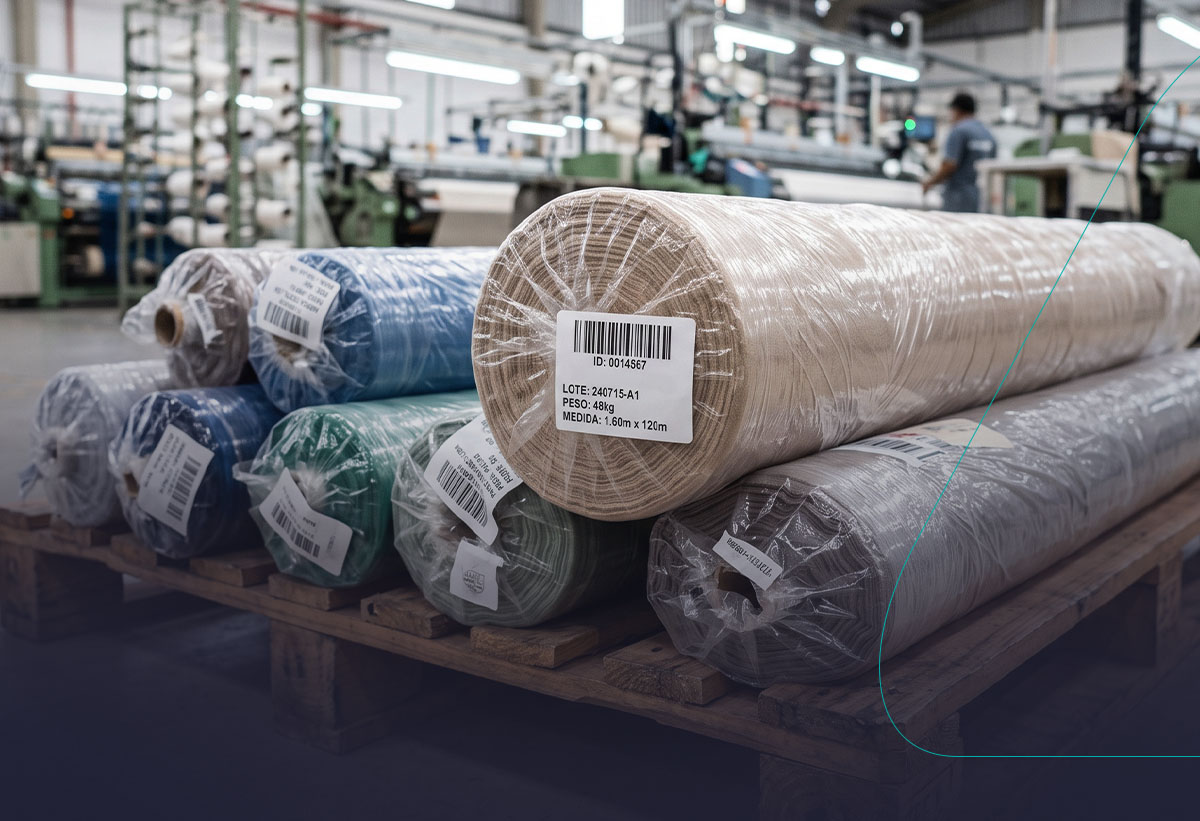
Roll traceability provides information such as weight, batch number, and identification details, which must remain linked throughout the packaging, weighing, labeling, and sorting processes. These data make it possible to track each unit all the way to shipping.
The problem is that when end-of-line stages operate separately, keeping each roll’s information up to date requires more operator intervention.
In this scenario, weighing is often performed manually, while label printing and application take place at another stage of the process. This requires an additional check to ensure that the recorded weight matches the identified roll, increasing the risk of discrepancies and mix-ups.
In addition, rolls must be moved between different workstations, requiring operators to organize and monitor their movement. When sorting orders, manual checks are also often necessary to verify the batch number, identification, and destination of each unit.
These activities are part of the daily routine in many textile industries. However, when they rely on separate control systems, they can lead to:
- Rework;
- Longer order preparation times;
- Difficulties in tracking fabric rolls.
The challenge, therefore, is not simply to carry out each stage, but to ensure that they all operate in a coordinated manner, keeping the information linked to the correct product until shipping.
Otherwise, it is precisely during these stages (packaging, weighing, identification, and sorting) that roll information can get lost.
After all, if the transfer between stages is not properly managed, a label may be assigned to the wrong roll or a weight discrepancy may go unnoticed, for example.
This compromises product identification and the correct routing of orders through to shipping.
Read also: Packaging of Textile Bobbins: How to Automate and Reduce Costs in Spinning Mills
What changes when packaging, weighing, and identification take place in sequence?
When end-of-line stages are integrated, each roll follows a standardized workflow.
However, this requires viewing packaging as part of the operational workflow, rather than as an isolated stage. After all, protecting a roll with plastic is only one part of the process.
To ensure control all the way through shipping, it is also necessary to weigh, identify, and route each roll correctly.
This is the approach behind Delta‘s Automated Roll Packaging Line, which integrates these operations into a continuous sequence, connecting product preparation with logistics management.
In addition to protecting the fabric against dirt and other factors during storage and transportation, the solution makes it possible to record roll information and guide sorting according to batch, order, customer, or destination.
With these stages connected, textile manufacturers gain greater process standardization. This helps speed up order preparation, improve storage organization, and make shipping more predictable.
Read also: What to Consider When Choosing New Machinery for Your Industry
How to evaluate your textile end-of-line processes?
The best way to evaluate textile end-of-line processes is to observe how rolls move from the end of textile production to shipping.
At this stage, it is important to understand:
- Weighing and identification: is each roll’s weight recorded and linked to the correct roll through an integrated process, or does this depend on manual controls?
- Internal handling: how many times do rolls need to be moved between workstations before they are ready for shipping?
- Roll traceability: is it possible to identify each roll and access information such as weight, batch number, and destination throughout the process?
- Order sorting: are rolls routed according to the order, customer, or destination, or does the team need to check this information manually?
- Operational productivity: how much time do operators spend on repetitive tasks, checks, and corrections that could be reduced by integrating these stages?
This makes it possible to identify whether end-of-line processes still have bottlenecks that compromise shipping organization and efficiency.
What’s next?
As we’ve seen, integrating packaging, weighing, identification, and sorting is an important step toward improving roll traceability, making textile shipping more efficient, and gaining a competitive advantage in the market.
Talk to a Delta specialist and discover how automation can optimize your industry’s end-of-line processes!