
Originally posted on 6/2/2018 – Updated on 22/01/2026
Fabric spreading preparation is one of the most important stages of garment manufacturing. After all, it is at this stage that the fabric is inspected, aligned, and organized to ensure accurate cutting, avoid waste, and maintain the quality of the textile product.
Therefore, optimizing this process is essential to increase productivity and reduce errors throughout production.
With this in mind, in this article you will learn how to improve fabric spreading preparation in the fashion industry and which practices make this stage more efficient.
Shall we get started?
How to optimize fabric spreading preparation?
It is not enough to perform proper fabric spreading if the preparation is not done correctly. Without a well-executed preparation stage:
- Fabric defects and flaws go unnoticed;
- The quality of the garments is compromised;
- Waste increases.
In this sense, optimization depends on controlling raw material variables. Many garment manufacturers analyze only the measurements of finished pieces but overlook the root of the problems, which usually lies in the fabric itself.
It is essential to have basic information about each roll, such as width, length, usable area, fabric grammage, and yield. These data are what make fabric spreading planning much more accurate.
After all, when the industry has access to real and up-to-date indicators, it can choose the best roll for each cutting order, avoid rework due to defects, and reduce variations that affect the final result.
The role of textile technology in fabric spreading preparation
As we have seen, optimizing fabric spreading preparation depends on data. Without it, there is no way to ensure the efficiency of this stage.
The problem is that today garment manufacturers still rely solely on the information provided on the manufacturer’s label. However, these measurements change after the fabric resting period. In other words, they are not accurate enough to ensure high-performance, high-quality fabric spreading.
The good news is that there are already textile technologies that automate this preparation process and provide full control over raw material variables.
They deliver precise information on aspects such as defects, usable width, actual length, and shrinkage, for example. This way, cutting is scheduled based on data, not assumptions.
See how they work:
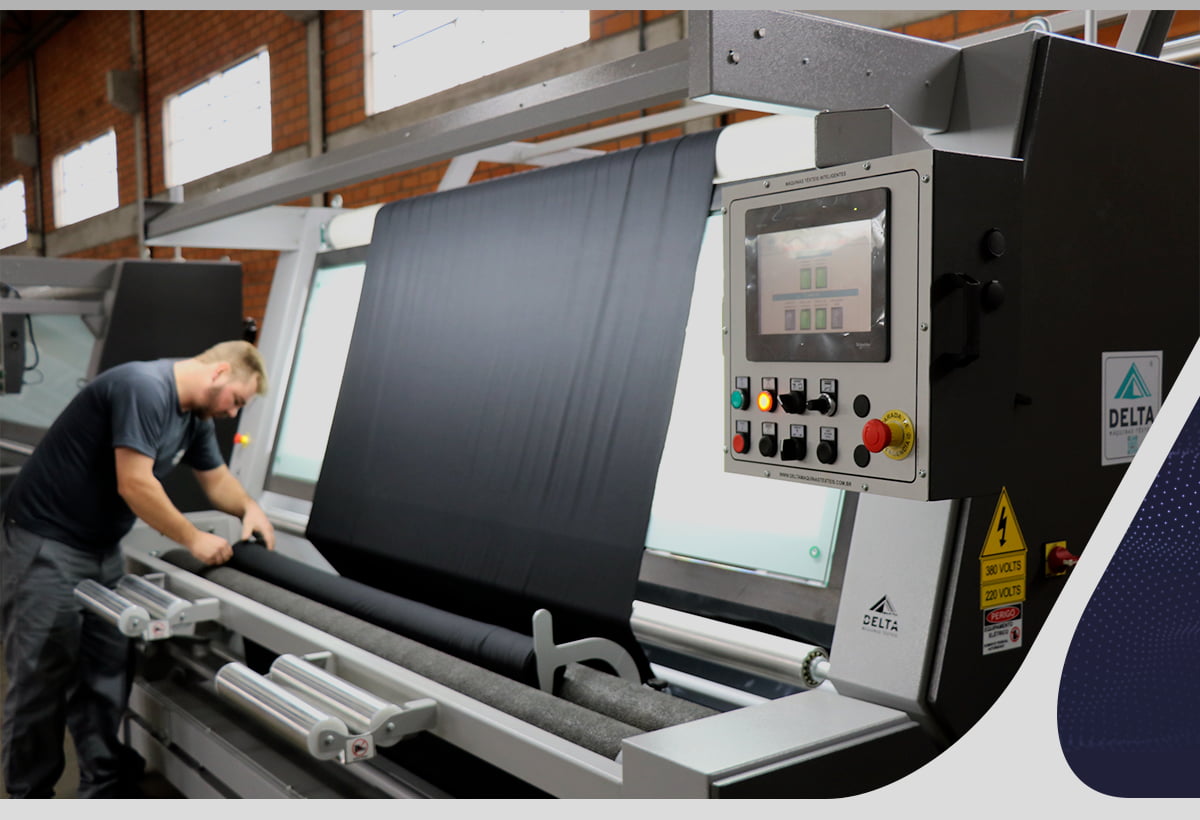
1. Inspection Machine
The Inspection Machine optimizes preparation right at the point the fabric enters the garment factory. It:
- Aligns the edges of the roll;
- Automatically identifies defects;
- Classifies fabric quality;
- Generates a report with actual data for the roll.
This makes it possible to know exactly what you are purchasing and avoid defects that could compromise cutting.
It is worth noting that the most modern versions use artificial intelligence to automatically detect defects, without relying on the operator’s eye. This reduces human errors, speeds up the process, and ensures a much more precise analysis of each roll.
2. Sample Washer
Shrinkage is one of the biggest variables in fabric spreading. With the Sample Washer, it is possible to:
- Obtain the actual shrinkage percentage of the fabric;
- Reduce testing time from 3 hours to just 20 minutes;
- Use a small amount of fabric.
This ensures more accurate cutting planning and reduces waste.
>> Also read: Why use a sample washer instead of household machines?
3. Relaxing Machine
Finally, the fabric resting process, which used to take 24 to 48 hours, can now be done in minutes with the Relaxing Machine, which:
- Performs complete relaxation;
- Eliminates curling and distortion in knitted fabrics;
- Provides the actual length and width of the entire roll.
This way, the fabric reaches the cutting stage stabilized and with reliable measurements.
What are the best types of fabric spreading?
Now that you know how to optimize preparation, it is important to understand more about the process and the characteristics of fabric spreading itself.
There are different types of fabric spreading, and they need to be chosen according to several factors, such as:
- Available equipment;
- Production needs;
- Type of fabric used;
- Grain direction;
- Selvage alignment, among others.
Now, let’s take a look at the main types of fabric spreading used in garment manufacturing:
1. Paired Spreading
Paired spreading, also known as accordion or zigzag spreading, is done by placing the fabric layers right side to right side and wrong side to wrong side.
Its advantage is speed, as this method already produces both parts of the garment, the left and the right.
2. Single Spreading
When using this spreading method, it is necessary to return to the beginning of the table to start spreading the next layer. Consequently, it produces only one part of each garment.
For this reason, it is usually used specifically for cutting asymmetrical pieces.
3. Right Sides Opposite
Fabrics that slide easily, such as velvet and chenille, need to be laid with the layers in opposite directions, starting from the same end of the table.
This prevents slipping between the layers and, consequently, errors in the cutting process.
Fabric Spreading Checklist: 4 Key Points for a Successful Stage
In addition to knowing which type of spreading to use, it is important to take some precautions during this stage:
- Avoid mixing fabric lots and shades, as this can cause tonal variations in the spreading. If mixing is unavoidable, use colors with high contrast to prevent confusion during sewing;
- Careful alignment of the selvages is essential for maximum textile fabric utilization. If folds or wrinkles form, there is a high risk of distortions that cannot be corrected during sewing;
- The number of layers of fabric is not only related to the quantity of garments needed. It should also consider the cutting knife height, fabric thickness, and the cutter’s skill;
- Each fabric should be analyzed individually, as not all have a defined cutting orientation due to characteristics such as nap, sheen, or prints.
Next Step to Ensure Fabric Spreading Quality!
Optimizing fabric spreading preparation is a decisive step to eliminate waste and improve the quality of your production. The precision required at this stage depends on textile automation and data control.
That’s why Delta Textile Solutions are indispensable. The Relaxing Machine, Inspection Machine, and Sample Washer ensure that your fabric reaches the cutting stage stabilized and fully inspected.
So, talk to a Delta consultant and stop wasting time and money on avoidable errors!