
According to industry projections, it is expected to expand from USD 11.23 billion in 2025 to USD 16.67 billion by 2031, reflecting the accelerating trend toward digitalization and modernization across industrial operations.
In the textile sector, this trend is also becoming a reality. Although significant advances have already been made, there are still several stages in the spinning process that offer valuable opportunities for automation.
Understanding this scenario is essential to identifying where the greatest competitive advantages lie and how technology can help create a smarter, more efficient yarn production process.
Enjoy the read!
The current landscape of textile spinning
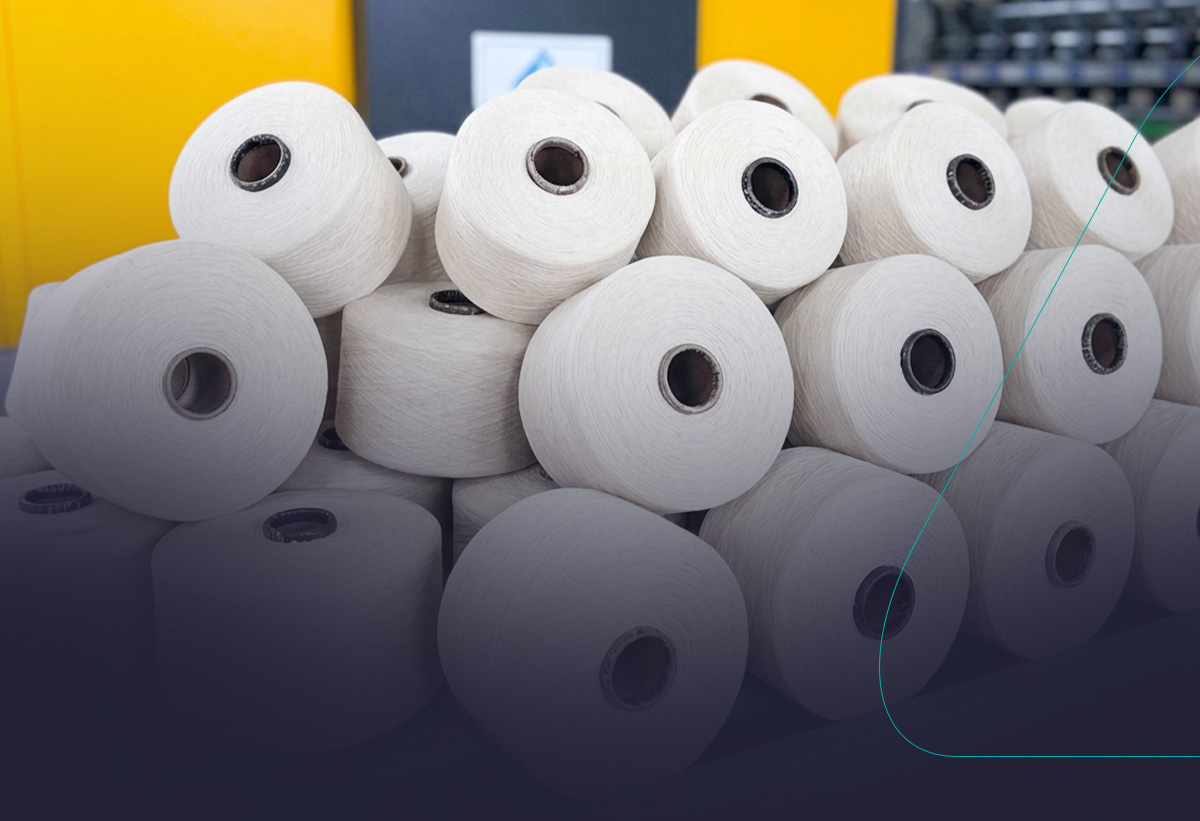
The truth is that textile spinning is an extremely traditional process. Manual spinning dates back as far as 1900 BC. At that time, animal and plant fibers were twisted by hand and then wound around a rod.
Even after the Industrial Revolution introduced mechanized spinning equipment, such as spinning frames, manual work remained a defining characteristic of the industry.
As a result, many operations still rely on manual processes in critical stages such as packaging, shipping, and yarn quality control.
In addition, it is still common to find production records maintained in spreadsheets, handwritten notes, or disconnected systems that do not communicate with one another, making it difficult for information to flow efficiently across departments.
In other words, while the spinning process itself has already achieved a high level of automation, supporting operations often lag behind in technology adoption, limiting the overall efficiency and integration of the production chain.
As a result, even facilities equipped with modern machinery may experience efficiency losses in post-production stages, reducing the benefits achieved throughout the spinning line.
This is because when critical processes rely too heavily on manual execution, the likelihood of inconsistencies and operational errors increases. The lack of standardization can lead to:
- Variations in packaging quality;
- Errors in batch identification and traceability;
- Failures in material control;
- Increased operational time;
- Higher rework rates;
- Reduced productivity;
- Damage to yarn during handling, storage, and transportation;
- Financial losses caused by waste and non-conformities;
- Customer dissatisfaction.
How are smart spinning machines transforming yarn production?
This is where automation in spinning truly stands out. But don’t be mistaken, the goal is not simply to replace manual tasks with automated equipment.
Instead, the objective is to leverage modern technologies to:
- Continuously monitor production parameters: through integrated sensors and control systems, manufacturers can detect variations as soon as they occur, allowing for quick adjustments before minor deviations become major issues.
- Identify failures and deviations in advance: by analyzing data generated throughout the production process, intelligent systems can detect abnormal behavior, signs of component wear, and operational variations that may compromise yarn quality.
- Improve production planning and predictability: rather than relying solely on operational experience or retrospective analysis, managers gain access to real-time information about production performance, enabling more informed decision-making.
This is the essence of Industry 4.0 in spinning. Its purpose is to establish connected processes that enable information to flow seamlessly across every stage of production.
A continuous data flow is created through technologies that communicate with one another, allowing each production stage to build on the information generated by the previous one. This provides greater visibility and control over the entire operation.
As a result, manufacturers can monitor operations in real time. By connecting equipment, systems, and departments, companies create a data-driven environment where information related to raw materials, yarn twist, tensile strength, production indicators, machine performance, quality control, and packaging is continuously shared and analyzed.
This approach creates a complete production history for every product from fiber opening to the shipment of the finished yarn package. Such traceability simplifies audits, supports the investigation of non-conformities, enables more accurate performance analysis, and enhances the reliability and security of operational data.

Automatic Packing System For Spinning Yarn Bobbins: a practical example of technology in spinning
Developed based on the principles of Industry 4.0, the EWB050 Automatic Packing System For Spinning Yarn Bobbins addresses one of the stages of the spinning process that has traditionally lacked automation.
It was designed to increase productivity, reduce reliance on manual operations, and provide greater control over the packaging process.
The machine organizes, protects, and packages yarn packages, ensuring standardized, high-quality packaging.
In addition, it:
- Helps reduce textile waste;
- Minimizes the risk of contamination;
- Preserves yarn integrity throughout storage and shipping.
These benefits are made possible by its ability to integrate with other factory systems and equipment, allowing packaging to become part of a connected, data-driven production flow rather than an isolated process.
With a processing speed of up to 12 yarn packages per minute and a modular architecture, the solution can be configured to meet the specific requirements of each operation, adapting to different levels of textile automation and production capacity.
The EWB050 can also be complemented with a wide range of modules and systems that further enhance process automation, including yarn wrapping units, automatic case packers, labeling systems, weighing systems, palletizers, and conveyor lines.
This flexibility makes it possible to develop customized solutions tailored to the goals and operational needs of each manufacturer. As a result, companies achieve greater operational reliability and improved efficiency throughout the final stages of production.
Read also: Textile industry machinery: a complete guide from spinning to garment manufacturing
Spinning automation starts with Delta
Delta is a strategic partner for textile manufacturers looking to advance toward Industry 4.0.
With extensive expertise in machine development, innovation, and textile process consulting, we design solutions that enhance product quality, increase operational efficiency, and strengthen competitiveness.
The development of the EWB050 Automatic Packing System For Spinning Yarn Bobbins is a clear example of this commitment. After identifying that packaging remained one of the least automated stages in many spinning mills, we developed a textile technology solution that transforms a historically overlooked process into an opportunity for greater operational performance.
Backed by Brazilian engineering, specialized technical support, and a continuous focus on innovation, we help spinning mills around the world accelerate the digitalization of their operations by combining productivity, traceability, and operational intelligence into a single, integrated strategy.
Take your spinning operation to the next level with Delta’s automation solutions and equip your facility with the EWB050!