The textile industry is increasingly evolving toward innovation. It is no coincidence that, by 2026, further advances in the adoption of automation and data usage are expected.
This trend is a direct response to economic volatility, changes in consumer preferences, and growing sustainability pressures, in other words, constant and increasing transformations.
In this context, smart automation solutions are gaining ground within modern spinning mills.
So, see how the textile industry can turn a manual and variable stage, such as the packaging of textile bobbins, into a standardized, safe process ready to meet the sector’s new demands.
Shall we begin?
Challenges of manual textile bobbin packaging
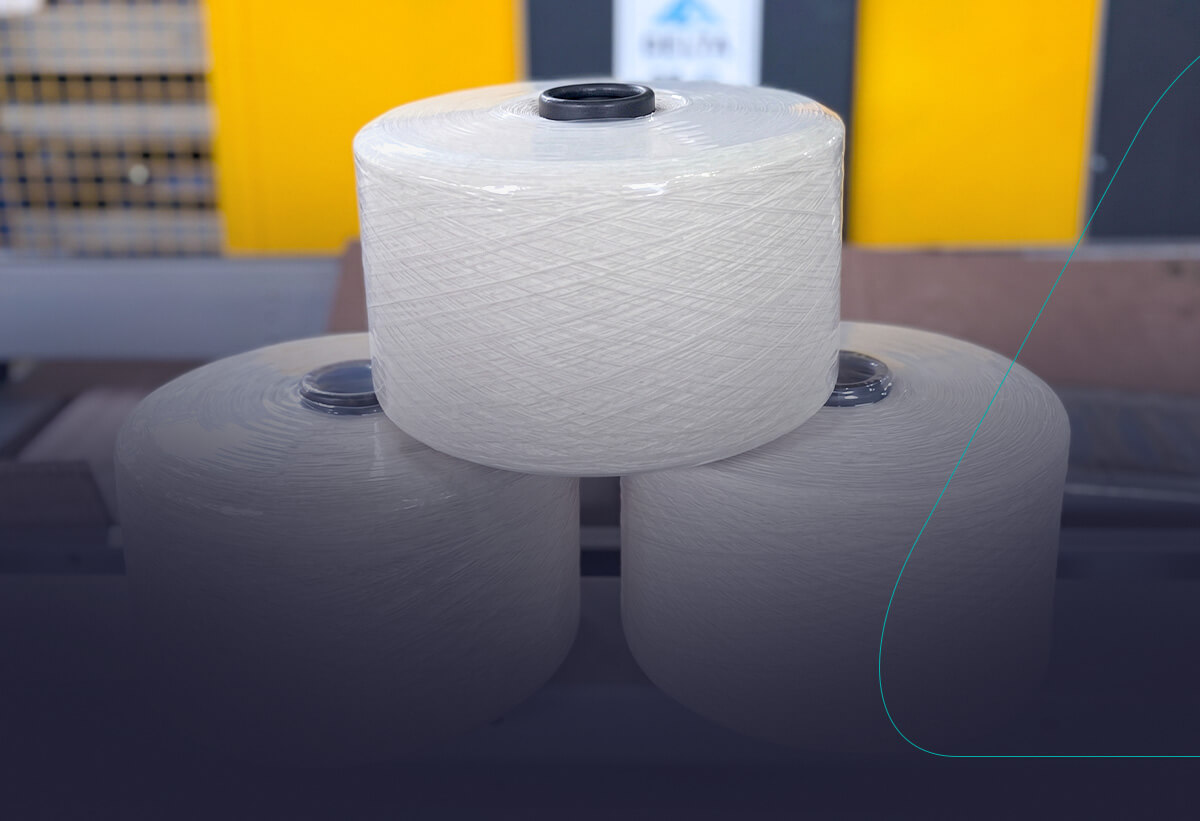
The truth is that in many spinning mills, the textile bobbin packaging stage is still performed manually.
The problem is that this step is critical for protecting the yarn during transport and storage, as well as for the final presentation of the bobbins.
As a result, when there is variability in this process due to manual work, the following issues may occur:
- High consumption of packaging materials: since application depends directly on the operator, it is common to see differences in the amount of materials used in each package. This leads to waste and higher operational costs;
- Lack of standardization in packaging finish: as each worker may apply materials differently, packages can end up with varying levels of finish and protection. This affects both visual appearance and packaging stability;
- Risk of yarn damage during handling: due to irregular use of materials, bobbins are more exposed to excessive contact, friction, and repetitive handling. This can increase the risk of deformation, contamination, and surface damage to the yarn;
- Slower dispatch and operational bottlenecks: since the process depends on each worker’s pace, productivity often fluctuates between shifts and teams. This compromises deadlines, reduces logistics flow, and makes scaling operations more difficult;
- Poor ergonomics and operational strain: repetitive movements, constant walking, and load handling are part of daily routines in many spinning mills. Over time, this can negatively affect ergonomics, increasing physical strain on workers.
Also read: 4 problems that hinder the growth of the textile industry
How does automation in spinning mills solve these problems?
Automation in textile bobbin packaging is responsible for speeding up dispatch processes and ensuring greater consistency in finishing.
This is mainly because it enables precise control over the application of packaging materials. As a result, it is possible to reduce waste of plastic, paper, and other inputs used in bobbin packaging, making consumption more efficient and predictable.
Beyond direct material savings, this level of control also improves operational planning in the spinning mill and contributes to more accurate cost management related to dispatch operations.
It also enhances safety in the handling of these products. This is because the automated process follows predefined parameters, ensuring consistent results regardless of the operator or production shift.
With this standardization and the reduction of manual interference, there is greater uniformity in packaging finish. This ensures more consistent protection, preserving product integrity during transport and storage.
This level of care helps reduce damage and maintain the quality perceived by the end customer.
As a result, the production flow naturally increases dispatch productivity. The operation gains rhythm and speed by reducing rework and bottlenecks.
Therefore, the textile industry is able to increase its responsiveness to higher volumes or demand peaks, always staying one step ahead in the market.
In summary, automation makes the operation more predictable, organized, and aligned with the quality requirements of the textile industry.
Also read: What to consider when choosing new machinery for industry?
How to automate textile yarn packaging
The EWB050 Automatic Packing System for Spinning Yarn Bobbins from Delta is the answer!
It was developed based on the Industry 4.0 concept to automate the organization, protection, and conditioning of bobbins, reducing reliance on manual operations and bringing more control to the packaging process.
With a capacity of up to 12 bobbins per minute, the machine directly contributes to increased productivity and reduced bottlenecks in dispatch operations.
In addition to operational speed, the equipment ensures process predictability. By automating the packaging application, the solution reduces variations between operators and shifts, ensuring a more stable and consistent flow within the spinning mill.
The modular architecture of the EWB050 also allows the production line to be configured according to each industry’s needs. Available optional systems include:
- Vertical Accumulator Device (Buffer System)
- Infeed Piston
- Bobbin Plasticizing Unit (Wrapping Station)
- Bobbin Packaging Machine (Baling Unit)
- Fixed Shrink Tunnel
- Automatic Box Forming System
- Automatic Case Packer
- Vertical Automatic Labeling System
- Palletizing Robot Arm
- Weighing System
- Conveyor line, enabling a fully integrated increase in dispatch automation.
The solution was designed with increasingly important industrial factors in mind, such as operational safety and ergonomics. The machine helps reduce repetitive strain and improves working conditions for operators.
Developed with Brazilian engineering and local technical support, Delta’s solution also offers closer customer service and better adaptation to the needs of the national textile industry, making automation more accessible, efficient, and aligned with real-world operations.
Textile bobbin packaging automation is with Delta!
The pursuit of greater efficiency in spinning mills increasingly involves eliminating manual processes that limit productivity. In this context, the automation of textile bobbin packaging is part of a broader industrial modernization strategy.
With the EWB050 Automatic Packing System for Spinning Yarn Bobbins, Delta reinforces its focus on the needs of the spinning segment, developing solutions aligned with the real challenges of the textile industry.
For nearly two decades, we have worked with a focus on textile technology, productivity, and the evolution of industrial processes, contributing to more efficient, safer, and more competitive operations.
If your spinning mill is looking to reduce waste, speed up dispatch, and raise the operational standard of bobbin packaging, now is the time to get to know Delta’s EWB050 and understand how automation can transform your operation!