
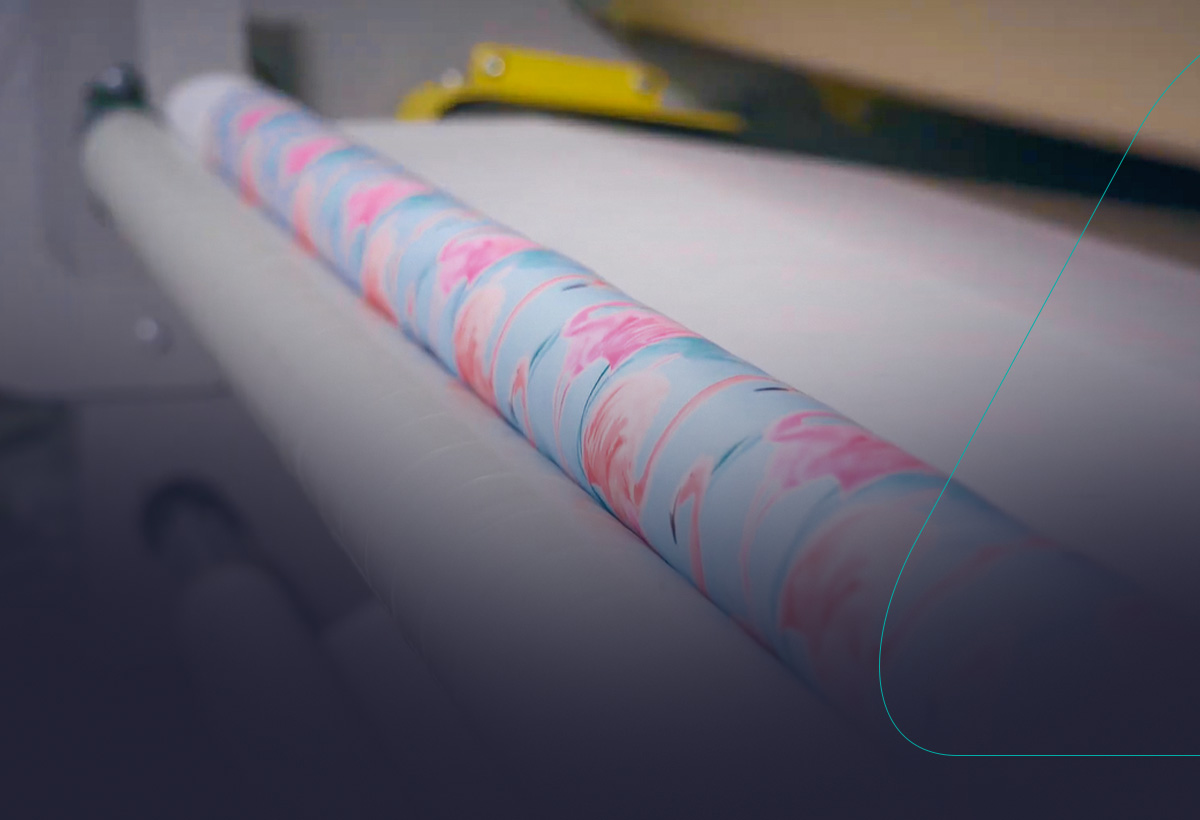
With sublimation growing rapidly, projected to reach US$11.6 billion by 2030, questions about print vs pattern are becoming more common.
However, in a scenario of expansion and high competitiveness, this is not just a technical or creative discussion. It is, in fact, about a choice that influences technology investments, production line organization, and the ability to scale with quality.
As the market demands higher visual standards, understanding how each application impacts the industrial process becomes essential to avoid bottlenecks, losses, and operational instability.
It is precisely in this context that the difference between print and pattern needs to be analyzed from a strategic perspective.
Want to learn more about the topic? Then keep reading!
Print vs Pattern: what’s the practical difference?
Print vs pattern is a common source of confusion. However, the difference goes beyond visual impact, directly influencing production planning, machinery selection, and the level of control required in the process.
That’s why clearly understanding this distinction helps avoid rework and losses during scaled operations.
So, take a look below at the main differences between these applications!
1. What is a print?
A print is the graphic result applied to a textile fabric. In other words, it is the “design” placed on the fabric, which can vary in size, positioning, colors, and visual complexity.
It is generally associated with creativity and differentiation, featuring detailed compositions and elements that require high fidelity in reproduction.
From a technical standpoint, this means:
- Need for precise registration.
- Strict color control.
- Thermal stability during the fixation process.
- Uniform image transfer.
Not surprisingly, visual complexity directly influences the choice of textile technology.
Read also: Digital and conventional printing: main differences
2. What is a pattern?
A pattern, on the other hand, is built during the weaving process. It is a planned structure that allows the fabric to be produced with a continuous repetition of graphic elements and shapes.
In other words, it differs from a print because it repeats infinitely across the fabric, maintaining alignment and visual continuity. It is also designed from the outset for repeatability at scale.
From an industrial standpoint, patterns support:
- Greater predictability in textile production.
- Better material utilization.
- Reduced operational adjustments.
- Easier standardization between batches.
This is because, as the design follows a fixed pattern, the production flow tends to be more linear, requiring fewer interventions.
Read also: Digital Silk: Why Are Industries Switching to Digital Printing?
How does this difference impact machinery selection?
Once you understand the difference between print and pattern, it becomes clear that the decision doesn’t end at the design stage. It extends throughout the entire production process.
That’s because each approach requires a different level of control, stability, and production flexibility, which directly impacts the choice of technology and textile machinery.
For example, the industry segment influences the level of technical requirements. In the fashion industry, the focus is on a variety of layouts and collections, with frequent changeovers. In home décor, on the other hand, color fidelity, dimensional stability, and perfect repetition over long runs are essential.
In addition, production volume also affects flexibility, repeatability, and operational agility. And in both prints and patterns, proper ink fixation is critical to the final result.
Temperature fluctuations, uneven pressure, or variations in operating speed can lead to:
- Color variations.
- Loss of definition.
- Image misalignment.
- Uniformity issues.
Prints with gradients, overlapping tones, or vibrant colors require a high level of fidelity. In patterns, even small color variations between batches can compromise the visual continuity of the final product.
The more complex the application, the greater the need for thermal control, registration precision, and process stability.
Details like these help guide the decision between print and pattern. But in both cases, the machinery must deliver predictability, stability, and seamless integration with the production flow.
Read also: Sublimation printing: how does it work
The role of digital printing in this scenario
In this context of increasing demands, digital printing has gained strong strategic relevance.
It meets both print and pattern needs with greater operational flexibility, enabling:
- Reduced setup time, especially for smaller runs or varied collections.
- Quick adaptation between different layouts.
- Less textile waste, as the process is more precise and controlled.
Within this scenario, the Transfer Calendar stands out. This is because it is the equipment responsible for turning digital prints into the final result on fabric, ensuring thermal stability, controlled pressure, and industrial repeatability.
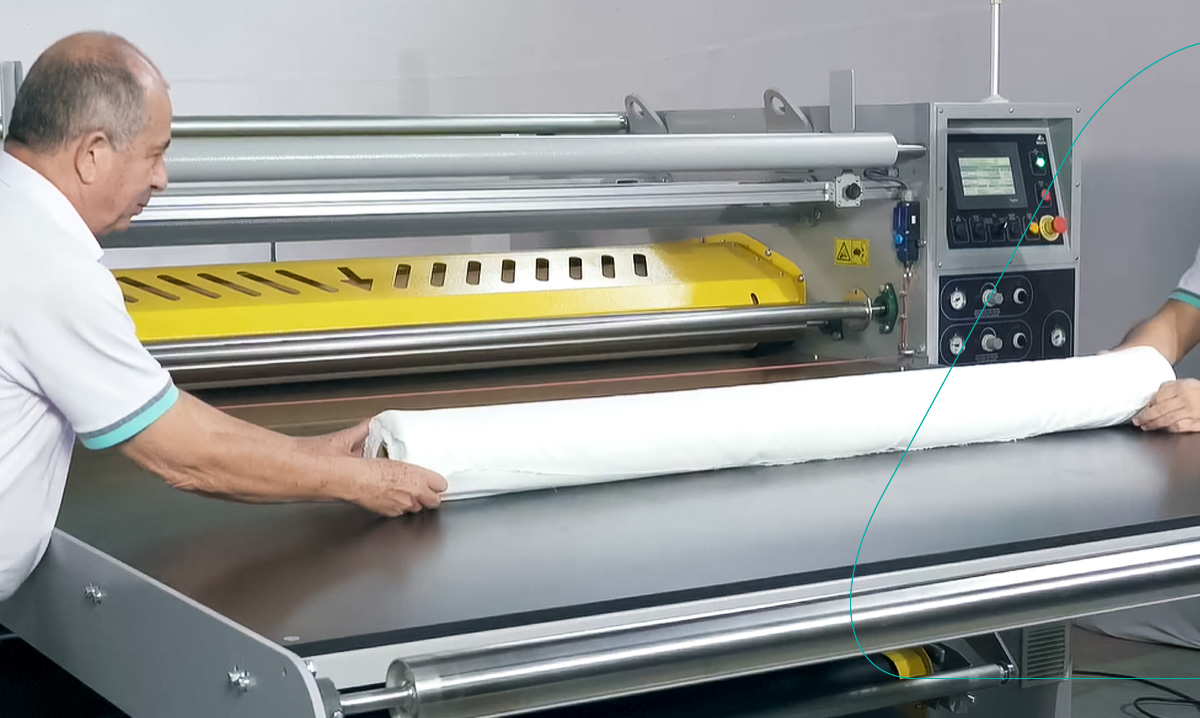
Designed for large-scale operations, Delta’s Transfer Calender performs the thermal transfer of sublimation ink onto the material through continuous heat and pressure.
This Delta solution offers:
- Precise temperature control via HMI.
- Thermal uniformity across the entire drum surface.
- Speed adjustment according to material and demand.
- Recipe settings for different types of fabric.
- Data integration with the company’s ERP system.
This level of control is especially important when considering the difference between print and pattern.
For highly detailed prints with color variations, thermal stability ensures visual fidelity from the first to the last meter. For patterns with continuous repeats, it ensures uniform repetition across long runs, without variations between batches or shifts.
In addition, automation reduces reliance on constant operator adjustments, replacing multiple manual presses and outsourced processes with a continuous, standardized, and scalable operation.
In other words, when an industry decides to invest in digital printing, the choice of calender machine impacts more than just image quality. It defines the level of production predictability and margin the operation can sustain.
Read also: Heat Press or Transfer Calender: Which Is Ideal for Garment Manufacturing?
Strategic benefits of investing in the right technology
As we’ve seen, print quality in industrial sublimation doesn’t depend solely on the digital file or the ink used. It is a direct result of thermal stability, controlled pressure, and the repeatability of the equipment.
For example, when a Transfer Calender does not provide proper uniformity and control, problems quickly arise, such as:
- Color differences between the center and edges of the fabric.
- Gradients along the fabric length.
- Loss of intensity at high speeds.
- Temperature fluctuations during shifts.
- Constant rework due to thermal failures.
- Forced speed reduction to avoid defects.
- Material waste and increased cost per piece.
As a consequence, this leads to:
- Waste of usable material area.
- Variation in patterns between batches.
- Frequent operational adjustments.
- Reduced productivity.
- Financial unpredictability.
This is where investing in the right technology stops being a cost and becomes a strategic decision.
Because when operations gain:
- Standardization.
- Automation.
- Reduced waste.
- Full thermal control.
- Data integration.
They begin to compete not only on price, but on reliability and delivery capability.
Investing in the right technology doesn’t just improve prints or patterns, it enables scale and supports consistent growth.
And a calender with robust thermal engineering and automated control does exactly that, by turning textile product quality into a repeatable standard.
Read also: Learn what fabrics are used for sublimation
Transfer Calender is Delta Textile Solutions!
Understanding the difference between print and pattern is more than a conceptual matter. It’s knowledge that directly impacts process control, technology selection, production predictability, and margins.
If your operation aims to reduce waste, eliminate thermal variations, and turn productivity into a competitive advantage, the next step may lie in the technology that supports the entire process.
And that’s where Delta Textile Solutions can help. Learn more about our Transfer Calender and discover how to elevate your operation’s standards!