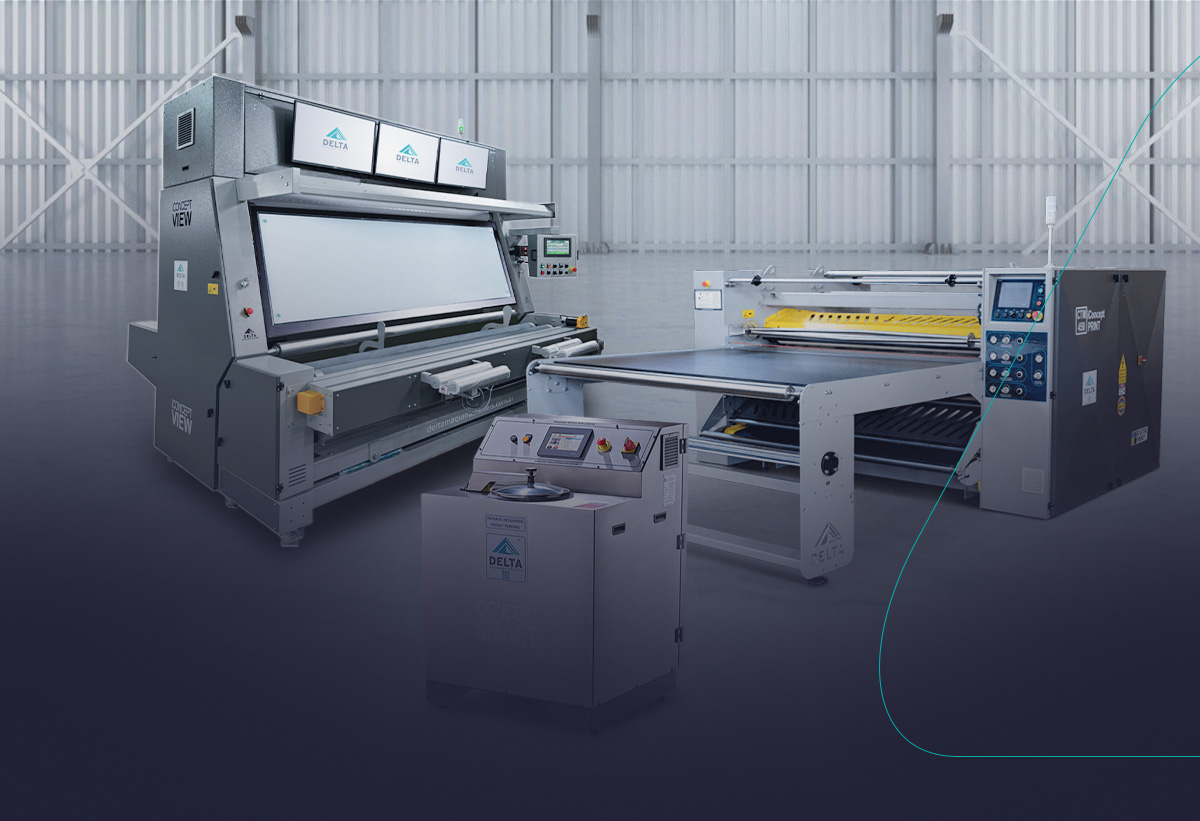
Without machinery for the textile industry, it is impossible to ensure an optimized, high-quality operation capable of generating returns and competitive advantages, such as the highly desired continuous, end-to-end production flow.
It is no coincidence that, by 2026, the textile industry is expected to move further toward innovation, automation, and the strategic use of data. Therefore, more than ever, talking about textile equipment means talking about the ability to adapt to new market demands.
To better understand the impacts and functions of these solutions, keep reading.
Shall we?
But after all, what are textile industry machines?
Textile industry machines are the main assets at every stage of production, playing a key role in standardization, automation, and process optimization.
This is especially true because they automate processes that would be highly complex and prone to human error if done manually.
When aligned with Industry 4.0 concepts and practices, textile machines can ensure high performance, efficiency, quality, and even sustainability.
Therefore, their role is precisely to optimize resources and production processes, enabling the industry to produce more in less time.
As a result, they are essential for success, growth, and profitability.
In this context, investing in modern textile machinery should not be seen as an unnecessary expense, quite the opposite. These machines are crucial for maintaining a healthy production process.
Just consider the impacts an outdated machine can have, such as:
- Unexpected downtime.
- Rework.
- Textile waste.
Long-term savings, profitability, and productivity depend on innovative, intelligent, and, above all, modern machines.
For example, Objeto Brasil replaced its conventional washers and dryers with the Delta DWM555 Sample Washer.
With this change, the company reduced testing time from 3 hours to just 15 minutes, resulting in a 75% reduction in fabric consumption and electricity costs.
This led to monthly savings exceeding R$15,000.
Similarly, Grupo Abrange, by bringing its sublimation process in-house with the Delta CTM450 Transfer Calender, gained greater control, productivity, and quality.
With thermal stability, high speed, and color consistency, the company was able to accelerate collection development and enhance product quality, increasing its competitiveness.
Explore some examples of textile industry machinery
To clearly illustrate the wide range of functions, benefits, and features of textile industry machines, we’ve selected a few examples based on the main stages of the production line.
Take a look below!
1. Spinning
The spinning stage is dedicated to transforming textile fibers (natural, artificial, or synthetic) into yarns that will serve as the foundation for the subsequent processes in the textile production chain.
At this stage, it is essential that textile machines help ensure performance, productivity, and quality in the industry’s final results.
A good example is the Automatic Packing System For Spinning Yarn Bobbins, which plays a direct role in organizing, protecting, and packaging bobbins, ensuring:
- Greater automation and standardization of packaging.
- Reduced waste.
- Lower risk of contamination or product damage.
2. Weaving/Knitting
The weaving and knitting stages involve processes that transform yarns into fabrics. At this stage, the following textile machines stand out:
- Goal Counter: performs automated counting of flat-knit pieces, identifying color patterns and production intervals.
- Double Automatic Tubular Knit Preparing Machine: prepares batches for different processes, such as dyeing and finishing.
- Tubular Fabric Inspection Machine: detects defects in greige fabric, preventing raw material loss after finishing.
Read also: What to Consider When Choosing New Machinery for Your Industry
3. Garment Manufacturing
At this stage, pieces are transformed into finished textile products. Garment manufacturing therefore involves several operational steps that enhance aesthetics, functionality, and quality.
Among them, the following machines stand out:
- Inspection Machine: inspects fabrics to prevent finishing and sizing errors during the spreading stage.
- Sample Washer: ideal for shrinkage and twist testing, ensuring quality control.
- Relaxing Machine: used to inspect fabrics and identify dimensional defects.
- Transfer Calender: transfers images and patterns from sublimation paper to fabrics with high precision.
Read also: 6 myths and truths about mesh relaxation
4. Processing / Digital Printing
Finally, the processing stage focuses on processes that enhance the properties of the material, adding value.
These activities ensure improved appearance, texture, functionality, and durability of the products.
At this stage, for textile printing and processing, the following equipment can be used:
- Bag Opener: essential for streamlining the process, preparing the fabric for subsequent stages such as dyeing.
- Digital Print Preparation: prepares textiles (through chemical and physical treatments) to ensure high-quality printing results.
- Automatic Roll Packer: capable of packaging up to 240 rolls per hour, also performing weighing and labeling.
- Hydro Sprinklers: responsible for applying liquids such as water, softeners, silicones, or specialized chemicals, significantly improving the final product quality.
- Stenter for Textile Finishing: an all-in-one solution that performs chemical impregnation, fabric alignment, drying, and/or heat setting.
Why is Delta a benchmark for innovation in the textile industry?
Delta is a recognized leader in the textile sector, operating both nationally and internationally.
With a strong focus on Industry 4.0, we develop modern, intelligent, and efficient textile solutions that support the overall advancement of the textile industry.
For nearly two decades, we have been innovating and driving the evolution of the sector through our technologies. After all, we believe that when one company grows, the entire industry evolves with it.
It’s no coincidence that we have helped Beckhauser Malhas eliminate its production errors and enabled KFK Private Label to reduce the cost of poor quality by 50%.

It’s simple! We are transformation agents, helping enhance your company’s competitiveness by providing solutions that generate data, eliminate waste, and drive continuous improvement.
Additionally, we offer training and consulting services to identify and correct gaps in your production cycle, ensuring excellence.
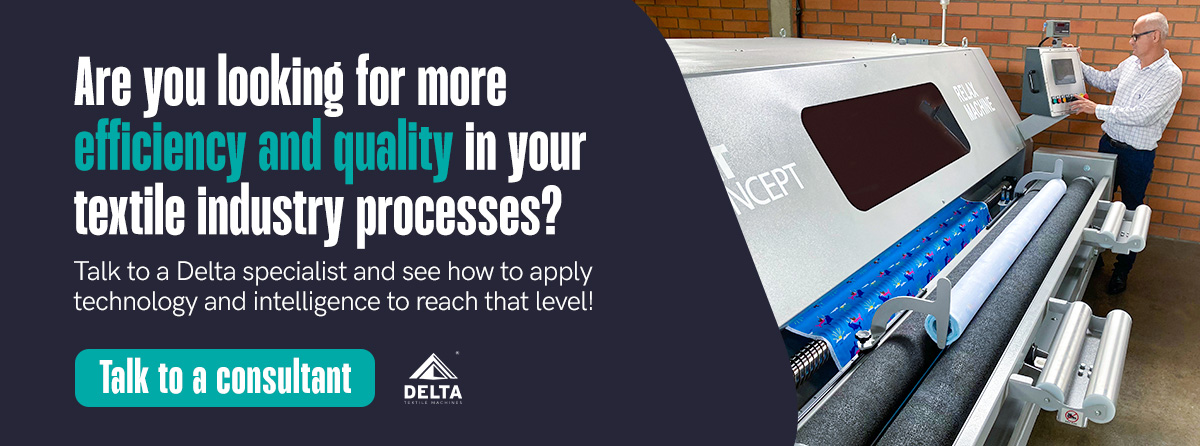
To find out how we can help solve your questions and challenges related to textile machinery, click the button below and speak with one of our specialized consultants.